“Don’t Ask, Don’t Tell”: Still Waiting for Repeal in the Evangelical Covenant Church

Andrew Freeman

Note: This blog was created for people to share their stories. Until now, I have mostly refrained from sharing details of my own. This is one part of my journey.  

Just over nine months ago, I sat on the piano bench in a church sanctuary, one eye on my music and the other on the screen of my smartphone. It was a Saturday morning, we were rehearsing for the upcoming Sunday School Christmas program, and between songs I was checking my newsfeed. The repeal of Don’t Ask, Don’t Tell had finally come to a vote, and I watched anxiously as the results came in. When repeal passed the Senate, I kept my excitement to myself, picked up my phone, and updated my Facebook status: “well, the U.S. Military is now officially on its way to being a more open and welcoming place than the Church.”

My sarcasm had some personal bitterness mixed in. You see, I was serving as a closeted gay associate pastor to this Covenant congregation. With the recent disclosure of my sexual orientation to denominational leadership, my future in Covenant ministry was feeling in jeopardy. I only had a few more weeks left at the local church, just a few more weeks of hiding at work. I had come out to essentially all of my friends (except those who were related to congregants) and to my entire family. The last vestige of the closet was at work, around the people with whom I was supposed to have formed authentic and meaningful relationships. Yet these relationships were limited by fear – of hurt and division. I loved the people I was serving, but worried they might not love me if they really, truly knew me. I hid to avoid causing pain for all of us, but the silence was slowly killing me. I was tired and miserable and ready – anxious, even – to be free.

That’s why the news of DADT’s repeal stirred up some mixed emotions in me. On the one hand, it was certainly an historic moment in the LGBT rights movement in our country. And my heart rejoiced with those soldiers who would soon be freed from closets of secrecy and shame, finally able to serve with honesty and dignity. Yet at the same time, this news only drew further attention to the reality that the church is lagging far behind. I was angered by the revelation that I could now, theoretically, openly serve in one of the last places on earth I would want to serve – the US Military, while the one place I most wanted to serve, the place that has been my home, my family, my source of identity, the place I had practically pledged my life to – the Covenant Church, no longer seemed to want me. Months later, when publicly sharing my story, I quipped, “Ironically, I’m a pacifist, and yet as an openly gay man I now have a better shot at firing a gun in the U.S. Military than preaching the peace of Christ every week in a Covenant Church.” I want you to know how deeply it pains me to say such a thing.

Fast-forward to the present. As of last Tuesday, Don’t Ask, Don’t Tell is no more. Once faceless gay soldiers now appear on TV, names and faces fully visible. The veil has been lifted. A young man films the phone call to his father in which he comes out, and the video goes viral on YouTube. One can’t help but feel moved by these stories and celebrate the progress this represents for our country. Yet still I ask: what progress have we made in the church?

I chose to disclose my sexual orientation to leaders in the church after deciding that the closet was not a healthy or sustainable place for me to live. In response, I have been told two things: 1 – sexual orientation alone does not disqualify a candidate from ordination in the Covenant Church, and 2 – there are gay and lesbian Covenant pastors who, living in accordance with the ethical guidelines for ministers, have been ordained. So, in essence, I am not alone and I can technically still seek ordination. Good news in theory, perhaps, but not so in reality.

When I asked to speak with these other LGBT Covenant clergy for solidarity and support, no names were given to me. Apparently, they are all still in the closet. I suggested that my name and contact information could be given to any closeted clergy who might contact me in confidence. One year later, I haven’t heard from a single person. Not one. I’ve been told that I’m not alone, but my only company is anonymous. In reality, this is not a safe church for ministers to be honest about who they are, and so I continue to stand alone.  One can be closeted, gay, and ordained in this church, but what about those who feel called to live in the light on the other side of the closet door? Turns out, there are costs to “telling,” but those details are for another post.

I made the decision to come out fully aware of the consequences it might have on my call to serve the Covenant church. I felt as if I had been forced to choose between my call and my integrity. I had to choose integrity. Yet this is not a choice the Church should require its ministers to make: one’s call and integrity should always be interwoven. I do not question the integrity of the lives of those who have chosen to remain in the closet. I do, however, question when that choice cannot be freely made from a place of safety, personal preference, and prayerful discernment, but is rather driven by the pragmatics of church policies and politics. Choices driven by fear seldom turn out to be life-giving.

It may not be an official, explicitly written policy, but the cultural realities I’ve described here essentially form our church’s own version of Don’t Ask, Don’t Tell. Not only is it unfair and unjust, it is also unbiblical. Ours is a God of revelation, who favors truth-telling. So I want to give others out there a space to safely tell the truth, even now. That’s largely why we created this blog, but for those who can’t yet risk such public exposure I’ve set up a private and confidential email: andrew@comingoutcovenant.com – write to me! I’d love to hear from you and walk this often-lonesome journey with you. Your story is sacred, and I will treat it as such – receiving it with respect, holding it in confidence. If the military can move past the days of serving in secrecy, isn’t about time the Church did, too?


Lynda McGraw: “My Beloved Brother”

Ralph Sturdy opened the doors of conversation in the Covenant Companion, and now this blog and Facebook page. I think now I can take a stand with others… Thank you.

There have been SO many times I have written this letter in my head and, more importantly, in my heart.  I was a coward. For years I thought it was to protect my brother’s memory, and other times I thought the Covenant was not ready. What if the door was slammed shut tightly and it was I who forced the issue? I did not want to hear the talk – it was my beloved brother that would be left out.  My dear friends have known my struggle. What if I put it out there and the church dismisses it, dismisses him, dismisses me?  After the line is drawn in the sand, what then? Can I straddle it?  I brag that the Covenant is very inclusive –  women ordained for the the pulpit? – infant baptism or dedication – praise songs or traditional hymns?  We are a modern church.  But alas the gay issue has been a very sticky subject – and an oh so personal one for me.

So here it is: my brother Mark was gay.  He was a wonderful, caring man who loved God.  Yes, you do hear the past tense.  He died in 1996 under the shroud of guilt and shame of AIDS.  He kept the secret that he was gay from his extended family, many of his friends, and for some time even me.  He was afraid that we would leave him out there– all by himself.  He had been told that he was not worthy of God’s love or even ours.  He did not dare bring his friends or his life into the shadows, let alone the limelight.  He attended functions alone for fear of being known.  Family weddings he was stag,  badgered by many “When are you going to get a nice girl and settle down?” I cannot tell you from how many people he hid who he really was, even from me his dear sister – his best bud.  For a while I was kept in the dark.   He worried what I might say.  I cannot tell you how that breaks my heart.

But he did have good reason to hide. One of our “Christian” relatives showed up at his door spouting the idea of “change your ways or Hell will welcome you on the other side.”  Mark did eventually share with me all of who he was and there is NO WAY I could say he was trash. He was Mark, the man who loved cats and a good book, who brought Christmas gifts to a friend’s kids when her husband walked out, and who stepped up as a class act in many situations. My husband and I visited with him and his partner, James, and my children carry his name as a badge of honor.  Do not get the idea that he was all alone, but the church did not welcome him or at least he did not trust it to open its arms. Neither did I trust the church.  I played my cards close – ever so close to the vest.  I could not take the chance that he would be left out in the cold.

Time went on and he became sick. Along with the illness came the “you deserve it – God’s curse.”  I held his secret of identity and health, and our family hunkered down together.  I said nothing at church: no requests for healing or understanding. I dared not.  Instead I sat in the pew, silent and steely.  Our pastor called when his obituary appeared in the paper, but I did not share much.  I am not sure if I was ashamed for him, for me, or for the church in general.

As years went by I could share in our writing group about the loss of him, but not all of who he was. I was raw and I felt I could not deal with anyone who would question his value.  I even worried about how my children would be treated and warned them that they may not want to share too much in school or church because some people might not understand.  Someone might disparage their uncle  of whom I spoke so lovingly, and they would not know what to do.

There have been several instances where I have met people at Camp Squanto or Pilgrim Pines and they ask about Mark.  I respond with his passing, but am afraid to say of what – because the assumption is that since he was gay he was a lost soul.  I am still protecting him even now. No one should think poorly of my brother. Maybe I have not given many the chance to step forward and show inclusion.  That has been much too frightening. If it is a bad reaction then I might have to walk away from my church.  What then?  A line drawn in the sand: Mark or my church?  Mark trumps.

So, there you have it.  My beloved brother was gay and he loved God and God loved him.  His memorial service was held in a Covenant church with a carefully invited crowd:  his partner of 10 years, James, his parents, his brother, me, and the trusted friends of all of us.  How sad it is that many feel the shame or fear to be themselves.

I “mark” a January day – yes, his name resonates with the verb – to state boldly that all of us are God’s people.  We need to welcome all believers and stop closing the door.  It is a cold  Sunday when I place flowers on the altar at the front of the sanctuary to mark his birthday and then death a week later on an oh so cold lonely January night.

I so hope the conversation begins,  understanding ensues and the doors fly open.  What would Jesus do?  He was and is with all who believe,  rich – poor, male – female, and I do believe gay and straight.

P.S. Editor’s note. Mark’s life story inspired the 1992 movie, “Doing Time on Maple Drive.” Check it out! 

Anonymous: “It Gets Better”

This author was part the Covenant Church since birth, attended Covenant Bible College, North Park College and Seminary, and has done ministry in Covenant Churches. She no longer attends a Covenant church, but is writing anonymously out of respect for her family who does, and in order to avoid hearing comments that cause emotional pain from people in a church she has loved.

————–
I had a dream a few years before I came out. In it I looked pregnant. In the dream, some people were telling me I was carrying a tumor and it needed to be cut out and destroyed. Others were telling me that I was carrying a baby and something precious to be born that was a part of me.

This dream was the start of my coming out process. For years I had been saying to myself “it’s a tumor, I have to kill it”. However, the more I tried to kill it through therapy and workshops to heal gay people, the more ill I became emotionally and mentally and spiritually. When you are not truly yourself, your relationships with God and others are not real. It felt yucky and fake to even think of dating men who I never felt attracted to. Everything about me felt fake because of the effort I had to expend to look straight. This tension manifested itself in suicidal thoughts and some unhealthy self harm, because despite years and years of trying, I was unable be straight. After my dream I realized that I was slowly psychologically aborting myself to be who the church said I was supposed to be.

After I had this dream, I reached out for help to someone who saw this as a baby and not a tumor. I did this because for me, it was either come out or die. I decided then that I would rather be alive and all of myself than living a life of self hate.

Coming out was not easy. My family still avoids talking about it to their fellow Covenanters even though they need support. I know they are not the only family with a gay child who are struggling.

In spite of the risk and how hard it was to come out, since then I have not had one suicidal thought. I no longer spend all my emotional energy trying to kill a part of myself. I also have found my relationships with God and others are more honest and real. I found Covenanters, some whom I didn’t expect, surprise me with their love for me even after they knew. There are amazing Covenant people at all levels of the church who get it, and who care for me even though I no longer have the option to minister in the Covenant Church.

After coming out I met my wife. A seminary classmate of mine married us. We now attend an Episcopal church which announces our anniversary right along with those of straight couples from the pulpit. We have found a place to minister and a church that accepts us just as we are. I do miss the Covenant Church. I also know God continues to do great ministry through Covenant people. I thank God for the Covenant who was used by God to bring my grandparents, my parents, and me to faith in Jesus. And that faith is what I take with me to the larger body of believers. It is my hope that one day the Covenant will be a church that sees no difference between my marriage and that of others. But for now I go where I am called by God.

And for anyone out there who is in the place that I was, hearing people say you need to get healed or change, etc., I want you to hear that it does get better. There are amazing Christian communities who will someday announce your wedding anniversary from the pulpit or put it in the bulletin with everyone else’s. You are worth keeping and if it takes leaving the Covenant to be healthy, know that God is not bound by one church. There are an ever- increasing number of churches who would love for you to join them and to minister and serve God with them. Although for now I have left the Covenant, the Covenant Church and the ministry of key people in it is something I take with me.

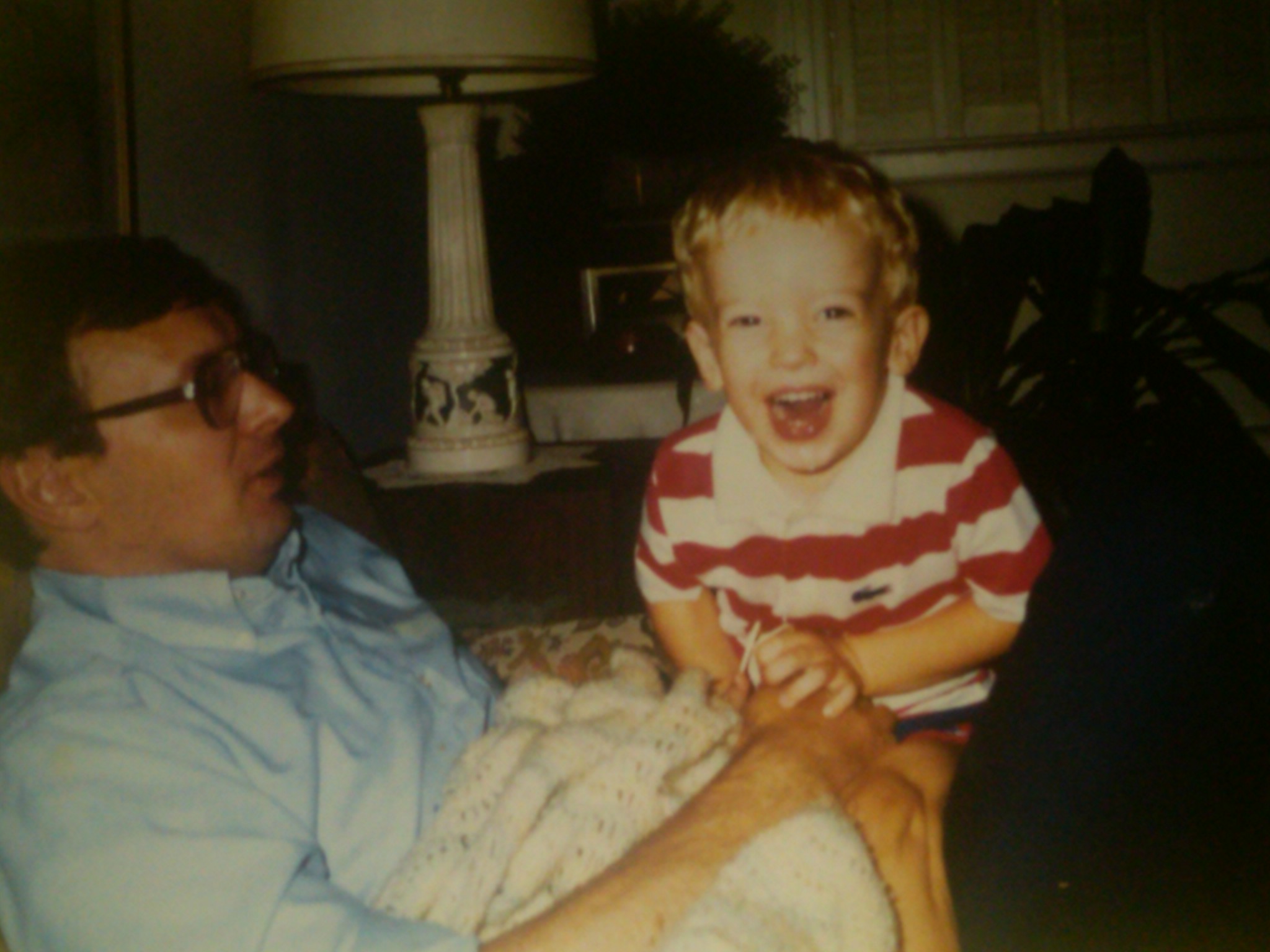
Bob Freeman: “O What Needless Pain We Bear”

Bob and Andrew Freeman

The school year was coming to a close and my son Andrew’s sixth grade class was scheduled for an all day field trip. But when we got to school, Andrew announced he was not going and refused to get out of the car. I was on my way to work and was not ready for a discussion.

“Andrew, you have to go to school. Get out of the car!” I insisted.

But Andrew has never been one to be easily persuaded. As we sat in a stalemate, a teacher passed by and joined the discussion. She showed more patience and asked a question I should have asked, “Andrew it’s going to be lots of fun. Why don’t you want to go?”

By this point Andrew was in tears. “I’ll just be spending all of my time with Paul and the other kids are calling us gay.”

“Oh Andrew, don’t worry” the teacher consoled, “you are not gay! It will be OK.”

She had the right initial question, and she got Andrew out of the car, but I wasn’t so sure I liked her response. “How do we know he is not gay?” I thought. “And what if he is?” Somehow I knew we had lost a teachable moment. It was a missed opportunity.

Fifteen years after that morning in the middle school parking lot, my wife and I sat in our kitchen one night and listened as Andrew told us he is gay. For fifteen years we hadn’t mentioned that morning, while Andrew struggled in silence and solitude. Was there something that could have been said that morning that would have been an opening for conversation earlier? This is the question I continue to wrestle with. I don’t have all the answers, but I can think of at least three things I know with certainty, three things I wish I had communicated sooner.

First, I have no idea why some of us are straight and some of us are gay, but I do believe that no one can choose to be gay just like you can’t choose your gender. You do not choose it, and you cannot change it.

Second, to those who are gay: it’s not your fault. There is no blame in being gay. There is no sin in being gay. It’s not your fault, it’s not anyone’s fault. It’s not a matter of fault; it is a matter of gift. It’s not an illness; it is by God’s design.

Lastly, as a parent I have to say, “It’s OK if you are gay. We love and support you, unconditionally.” Our family and our home will be a safe place for anyone who is gay, whether they are our children or our children’s friends.

If I had said those things years ago, maybe I could have spared Andrew some of the pain of finding his identity. Yet this is a conversation we should have with all our children, gay or straight. If they are gay, this might just save their life. If they are straight, they might not be the one to bully the gay person over the edge or might just be that one that befriends someone with the word, “It’s OK. I accept you as you are.” We cannot afford more missed opportunities.

This may be easy for me to say now because we have a gay child, but we also have three straight children who have not turned their back on their brother. I cannot say that I am proud of my son for being gay – he did nothing, he had no choice. But I can say that I am very proud of the way he has taken this challenge head on with honesty and dignity. And I am also proud of my family that has stood by Andrew.

As I said, I have no idea why some of us are straight and some of us are gay, but I also have no idea why some of us are so homophobic and some of us are so perfectly comfortable with accepting him as he is. Homosexuality is not a choice, but homophobia is. Since the start of this blog, many people who used to ask, “how is Andrew?” have stopped asking about him. I don’t know if they think we are uncomfortable talking about him or if they are uncomfortable talking about him. But they have stopped talking, and that is not the right choice.

I am not uncomfortable talking about my son, because I love my son. Do I wish he wasn’t gay? That is such a small part of who he is, but the pieces of the fabric of who he is are so interwoven that if I pulled that one piece out I have no idea what else of Andrew I would lose. Would he still be able to preach with the same intensity? Would his piano playing still have the same feeling? The Andrew I know and love has always been gay, but I’ve only known for a year.

This “issue” is not going to simply go away, and not talking about it is not an acceptable answer. Much of the pain and anguish that LGBT children in our churches bear is needlessly borne alone and in silence. The saying goes, “If you are not part of the solution, you are part of the problem.” Homophobia is a problem. Will you be part of the solution? If so, we need to talk.

Rev. Sara Salomons: From the ECC to the UCC

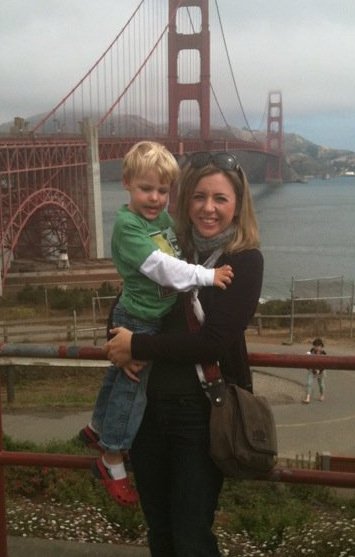
Sara Salomons and son, Caleb

I’m a happy and proud graduate of North Park Theological Seminary.  My three years at NPTS were some of the happiest in my life.  I often describe my seminary experience as being womb-like.  I was fed and nurtured and loved.  My voice was heard.  My opinions mattered.  Pretty magical, if I do say so myself.

Shortly after seminary graduation it was time to write my application for ordination.  I approached it like I approach everything in life – with honesty.  One of the last questions of the application concerned human sexuality.  It covered the gamut – premarital sex, extramarital sex, homosexuality, and cohabitation.  I was asked to briefly respond to the whole of human sexuality in one small space.  I couldn’t do it.  It was such a huge question.  I didn’t even know where to begin.  I assumed I was to provide a brief and acceptable answer.  And I didn’t have that brief, acceptable answer.  I remember saving it for last.  How was I going to honestly answer it with diplomacy and integrity?  I spent thousands of dollars and three years of my life on training to become a minister, I couldn’t toss it all out the window because of this question about sexuality on my ordination application.

Rev. Eva Sullivan-Knoff: Reflections of God’s Love and Grace

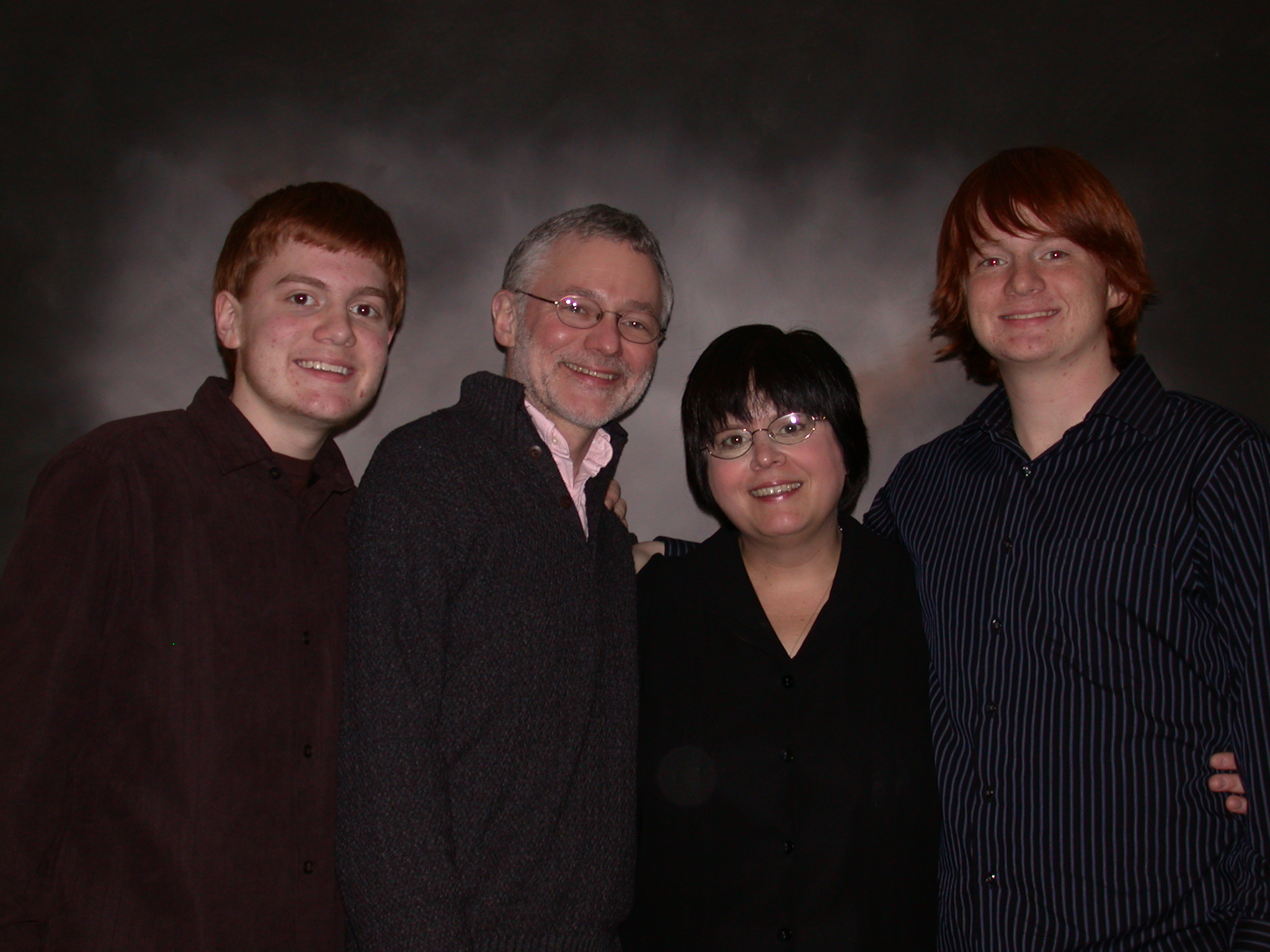
Eva Sullivan-Knoff and Family

When our son came out to us, his dad and I were moved by his pain. As parents, nothing hurts more than seeing your son or daughter in pain. It hurts in a way that nothing else does, no matter the substance of the pain. The same thing is true when there is cause for celebration in your son or daughter’s lives. Nothing fills a parent’s heart more than sharing in their joy. There is truly nothing else like that. Because of the love parents have for their son or daughter, they share their sorrow and they celebrate in their joy.

In the scriptures and in the church, we are given a similar message in our relationship to one another. In Romans 12:15 we are told to, “Rejoice with those who rejoice; mourn with those who mourn.” As the Body of Christ, we are to share each other’s heartaches and to celebrate each other’s joys, just as parents hopefully do with their children. It is one of the greatest ways we show our love for each other.

Rev. James Anderson: Covenant Conflicts

Rev. James Anderson

Author’s Note: What follows are memories of one who has been in and about Evangelical Covenant churches all of his 80 years. Aside from consulting confutable memories, there has been no searching of archives for facts.

I was young, but not too young to figure out what was happening when scandal disturbed our bucolic Iowa farm community. A well-known young man had secretly married a divorced woman. I learned quickly that divorce was taboo, expected far away in Hollywood but not where we lived. It didn’t help that the man’s family had deep, founding roots in the Mission Covenant Church, or that he was part of our extended family. The couple stayed married to one another and part of that community the rest of their lives, eventually well-respected and admired, but they seldom appeared at my home church other than for weddings, funerals, and other obligatory events.

When I arrived at North Park Theological Seminary in Chicago in the early 1950’s, divorce was a hot button topic, stirring opinions right and left—one side proclaiming, “The Bible says. . . ,” others declaring, “But the Bible also says. . . ,” on and on. The source of those arguments was a promising seminarian who had informed seminary and church leaders he would marry a divorced woman, an unheard-of infraction of propriety if not actual rules that must surely block his being pastor of a Covenant church. In those dorm room discussions, most assumed he would move to a more liberal denomination, as had others who were unable to accept restraints of Covenant theology and practice. However, his great desire was to serve in Covenant churches, thus the dorm room discussions, pale reflections, I suppose, of heated confrontation in ministerial boards and seminary faculty meetings.

Casey Pick: “A Broken Family”

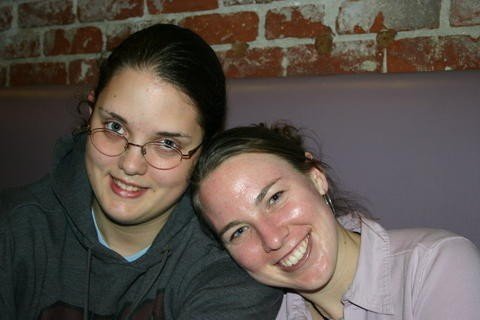
Casey and Amy (L-R)

Over the course of our friendship, Amy and I have discovered that we are in many ways mirror images of each other – very similar in some ways, and yet such complete opposites in others that it is faintly ridiculous and evidence of God’s presence in our lives that we are friends at all. Given this, it was fitting that we each independently discovered “Coming Out Covenant” simultaneously. She found it because of her lifelong affiliation with the denomination. I found it because of my work as a professional activist fighting on behalf of the gay, lesbian, bisexual and transgender community who specializes in outreach to conservatives and people of faith. Together we celebrated its existence, and speculated as to what this conversation could mean for the Evangelical Covenant Church that we both love.

It wasn’t until one day as Amy – further proving her mettle as a true friend – was helping me move that she told me she’d been waiting impatiently for my contribution to the site. I will never forget the look on her face when I told her I wasn’t planning on writing one, that I didn’t feel I could. You see, this is a website for people who consider themselves to be a part of the Evangelical Covenant Church – and I didn’t, not really. Not yet.

Amy Beisel: “Family Ties”

Casey and Amy (L-R)

Casey is my dearest and unlikeliest of friends. In college she was assigned to live in the dorm that I shared with five Christian women, in a suite affectionately known as the “God Pod.”  Casey was openly gay and openly hostile towards Christianity.  After the things some Christians had said to her — that God hated her, that she was going to hell, that she was an abomination in God’s eyes — who could blame her?

During the year that we lived together, Casey was curious about the fact that we worshiped God and that we respected her, that we loved Jesus and also loved her.  She joined us at our Christian fellowship meetings and tagged along to church.  We even did Bible studies together so she could learn more about the real Jesus, not the hateful God she had heard about.  But as Casey came to believe that Jesus was God and that He might even love her, we had to confront one final, urgent question: Could she be gay and Christian?

Remember the Other Question

"How goes your walk with the Lord?"

Last night as I was sitting in my bedroom reading, I suddenly became aware of the date. Exactly four months have passed since that January morning when I woke up, sat down at my computer, logged into WordPress, and clicked “publish” for the first time. I put a link on my Facebook page and went upstairs to make breakfast: oatmeal and blueberries – just another day in the life of the recently unemployed. I sat in the kitchen and ate my fibrous morning meal, thinking to myself, “who’s really going to read this blog?” I had already come out to my entire family, to most of my friends, and to nearly everyone I encounter in my day-to-day life. I imagined those who would see my link on their Facebook news feed simply saying, “Oh, Andrew’s gay; knew that already,” then keep scrolling. But by the time I returned to my desk, my inbox had started filling up, my phone was ringing, and Facebook notifications were coming in by the minute. At the end of the day, we had received nearly 4,000 hits.

To this day, I still don’t quite get how it happened.